
Where voltage correction sits in the network — and why building it into the transformer changes the footprint, the maintenance, and the accountability for the plants that depend on it…
Most industrial plants in India take their supply at high tension and step it down on site. The quality of that supply is rarely steady. Grid voltage swings with the season, with the time of day, and with whatever else is drawing on the same feeder — and the plants that feel it most are the ones running processes that do not tolerate variation. For a long time the standard answer was to correct the voltage on the low-tension side, after the step-down transformer, using a servo stabiliser. That works, and for many plants it remains the right choice. But it is not the only place the correction can sit, and for larger loads it is often not the most sensible one.
Correcting on the HT side — before or at the transformer — has a straightforward logic to it. The current is lower at high tension, so the regulating equipment is smaller and its losses are lower for the same delivered power. The correction happens once, upstream, and everything downstream sees clean voltage. This is the role of the HT AVR: a high-tension automatic voltage regulator that holds the supply within a tight band regardless of what the incoming line is doing.
The HT AVR
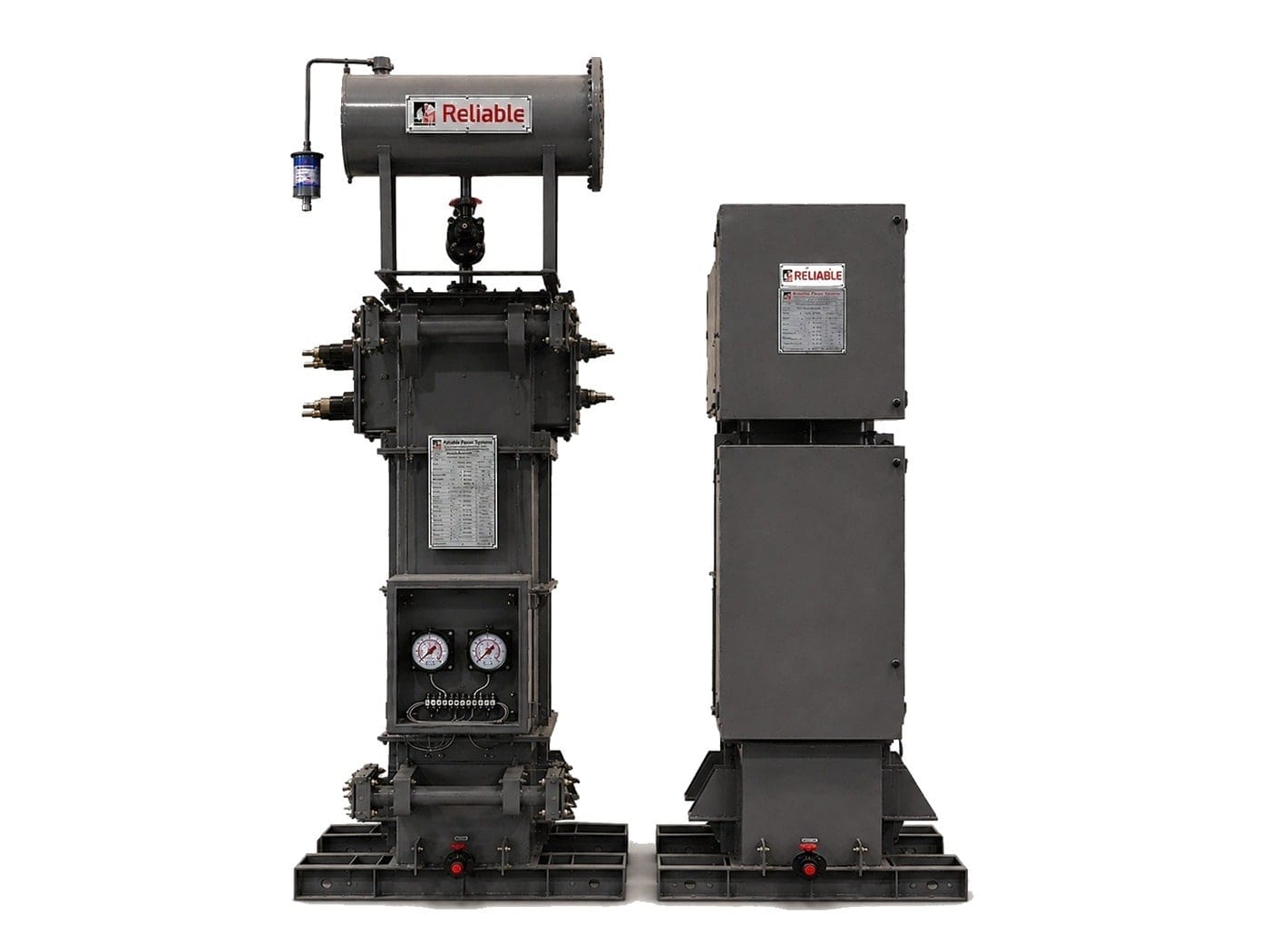
An HT AVR regulates voltage at high tension using a rolling-contact mechanism driven to track the incoming supply and correct it continuously. It is a proven approach, built for loads in the megavolt-ampere range, and it does a job that low-tension correction cannot do as efficiently at that scale. For a plant drawing several MVA, regulating once at HT is cleaner and more economical than trying to stabilise the same power after step-down.
Reliable Power Systems builds HT AVRs for this duty across the range that Indian industry actually uses, up to 25 MVA, and has supplied them into applications where the incoming supply is genuinely difficult — long rural feeders, plants at the tail end of a distribution network, sites where the voltage can sag well below nominal for hours at a stretch. The equipment is designed to hold output steady through all of it.
HT Transformer with Built-in AVR: Two Functions, One Tank
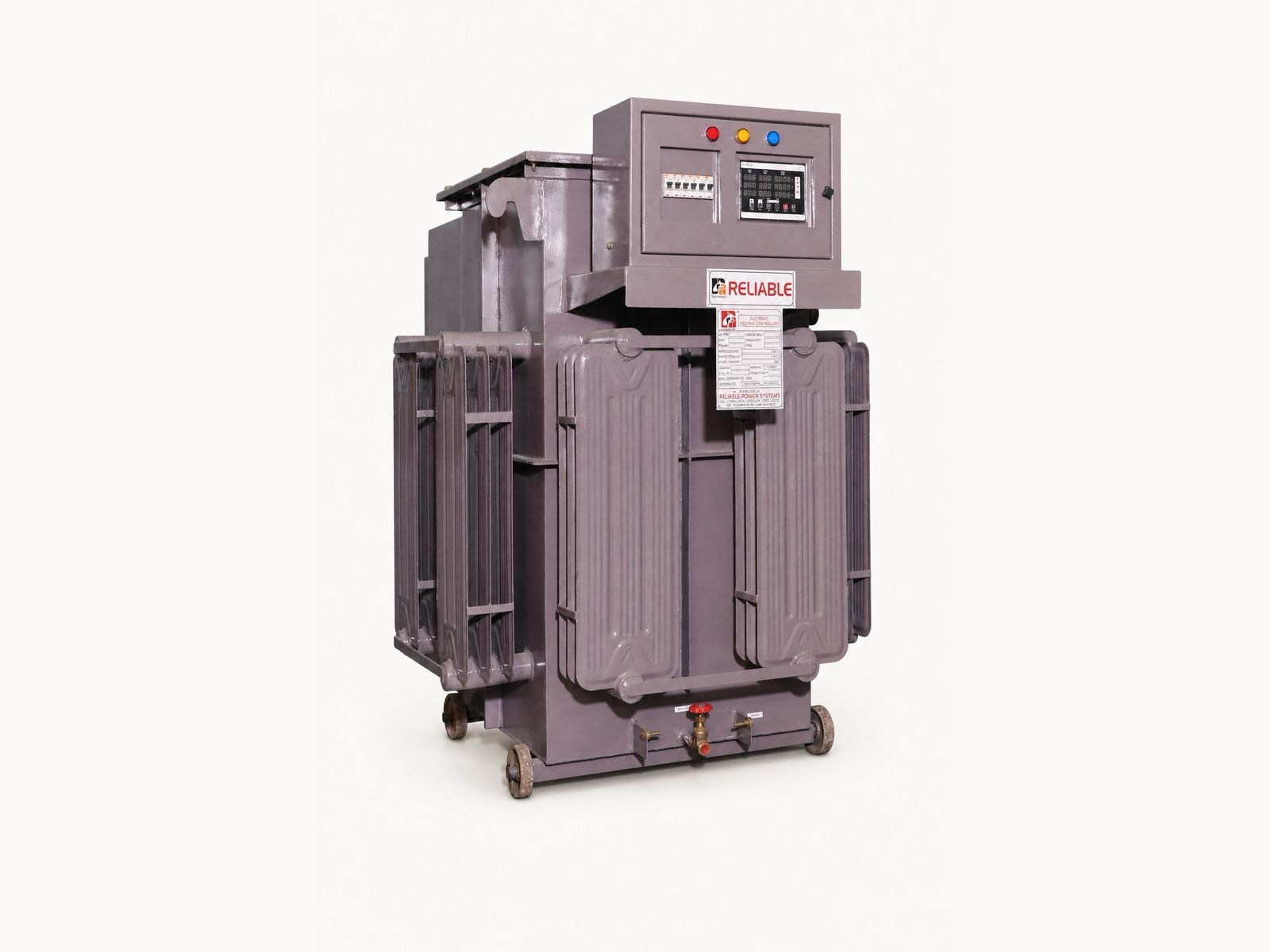
The step that follows naturally is to stop treating the transformer and the regulator as two separate machines. An HT transformer with built-in AVR — a product Reliable Power Systems is known for — combines the step-down transformer and the automatic voltage regulator in a single tank. It takes incoming HT, stabilises it through an in-built rolling-contact mechanism, and delivers a steady low-tension output. For a plant that needs both functions, and most do, this changes the equation in a few concrete ways.
The first is footprint. Two separate machines need two foundations, two sets of cabling, and the floor space to sit them side by side. A single HT transformer with built-in AVR does not. On a crowded plot — and most industrial plots are crowded — that space is worth having. The second is losses. Integrating the regulation into the transformer removes a stage of cabling and a separate tank of losses; the HT transformer with built-in AVR runs more efficiently than the two-machine equivalent it replaces. The third, and the one plant engineers tend to raise first, is accountability. When the transformer and the AVR come from one supplier in one tank, there is no question of where a problem sits. It is one machine to specify, one to install, and one supplier to hold accountable if the voltage is not where it should be.
Reliable manufactures HT Transformer with Built-in AVR upto 25MVA.
None of this makes the separate-machine approach wrong. A plant that already owns a sound transformer and only needs to add regulation has no reason to replace it. But for a new installation, or a replacement of ageing equipment, the HT transformer with built-in AVR is usually the more deliberate choice — and it deserves to be considered at the design stage rather than bolted on afterwards.
The Part that gets Underweighted: Service
Rolling-contact regulating equipment is mechanical, and mechanical equipment needs attention. This is not a mark against it — it is simply the nature of the technology, and it is entirely manageable when the service is there. What separates a good installation from a troublesome one, over a ten- or fifteen-year life, is rarely the specification on day one. It is whether someone answers the phone when the plant needs them, and whether they can be on site with the right parts before a stoppage turns into a loss.
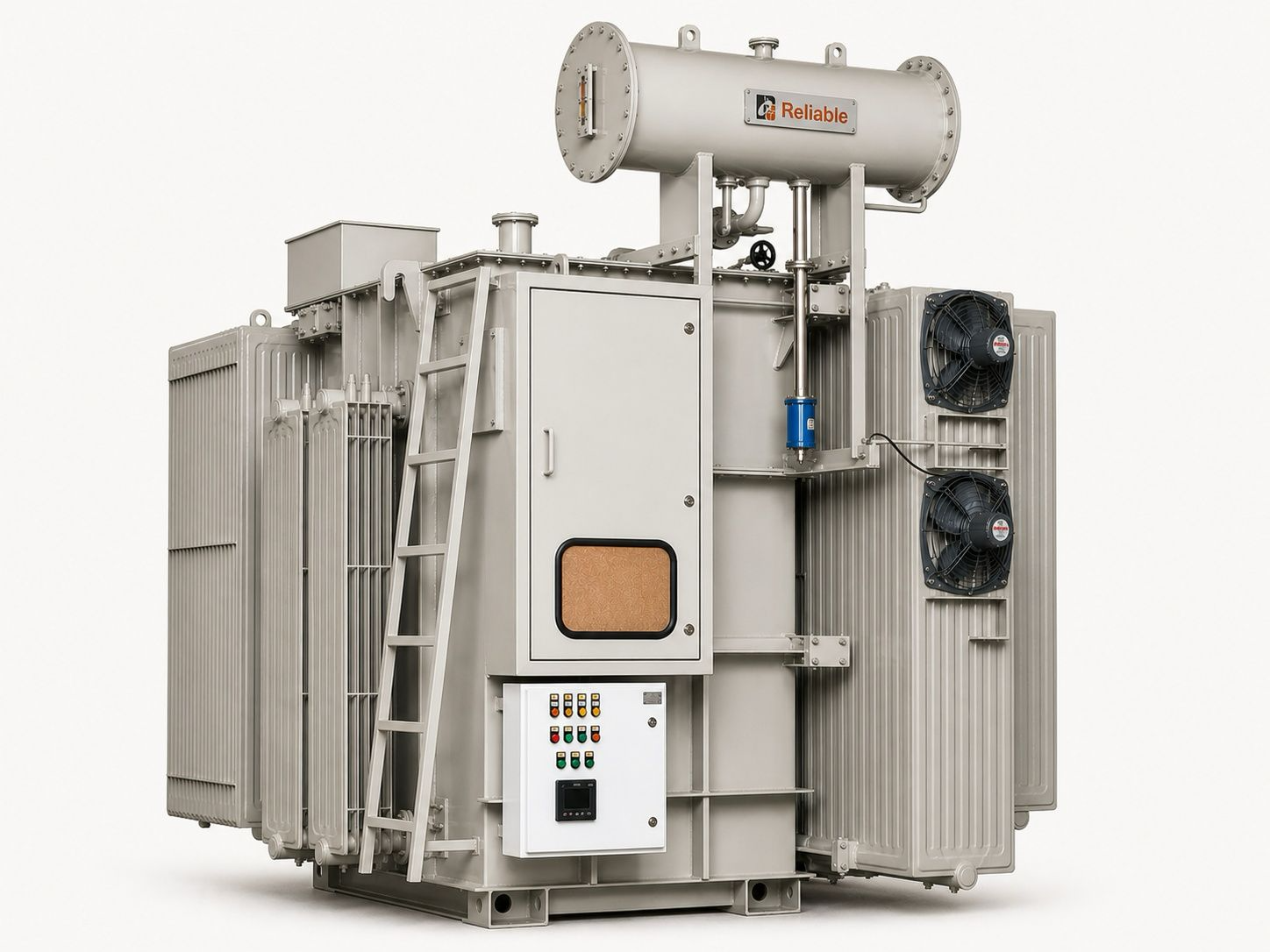
This is the part of the decision that gets underweighted at the procurement stage, and it is the part Reliable Power Systems treats as central to the product rather than an afterthought to it. The company services what it builds — prompt field response, scheduled overhauling of the contact mechanism and the regulating assembly, and repair of units that have been in service for years, including equipment originally supplied by others. An overhaul restores a well-built HT AVR to close to its original performance; it does not require replacing the machine. For a plant, that is the difference between a capital decision and a maintenance one.
Over a fifteen-year life, the specification on day one matters less than whether someone answers the phone on day two thousand.
The through-line across all of this is that voltage regulation is not a component you buy and forget. It is a piece of the plant that runs continuously, wears predictably, and rewards a supplier relationship that lasts as long as the equipment does. The HT transformer with built-in AVR gets the engineering right at the outset — smaller footprint, lower losses, single-point accountability. Prompt service and overhauling keep it right for the years that follow. Both halves matter, and the plants that get the most out of their equipment are the ones that plan for both from the start.
For more details
Rohan Sharma, Executive Director, Reliable Power Systems
Email: info@reliable.net.in
Website: www.reliable.net.in
Reliable Power Systems
To discuss an HT AVR, an HT transformer with built-in AVR, or service and overhauling of existing equipment, get in touch:
Mr Arun Sharma – +91 98100 73870
Mr Rohan Sharma – +91 93103 07186
Reliable Power Systems designs and manufactures HT AVRs, HT transformers with built-in AVR, and a full range of power-conditioning equipment in Faridabad, and provides prompt service, overhauling, and repair across its installed base.
Visuals/captions on page 53:
- 12 MVA HT AVR
- 1 MVA HT Transformer with built-in AVR
The page also carries the company statement: “Reliable Power Systems designs and manufactures HT AVRs, HT transformers with built-in AVR, and a full range of power-conditioning equipment in Faridabad, and provides prompt service, overhauling, and repair across its installed base.”
—-seo part —
Meta Title
HT Transformer with Built-in AVR | Reliable Power Systems
Meta Description
Discover how HT transformers with built-in AVR improve voltage regulation, reduce footprint and losses, and provide reliable power for industrial plants.
