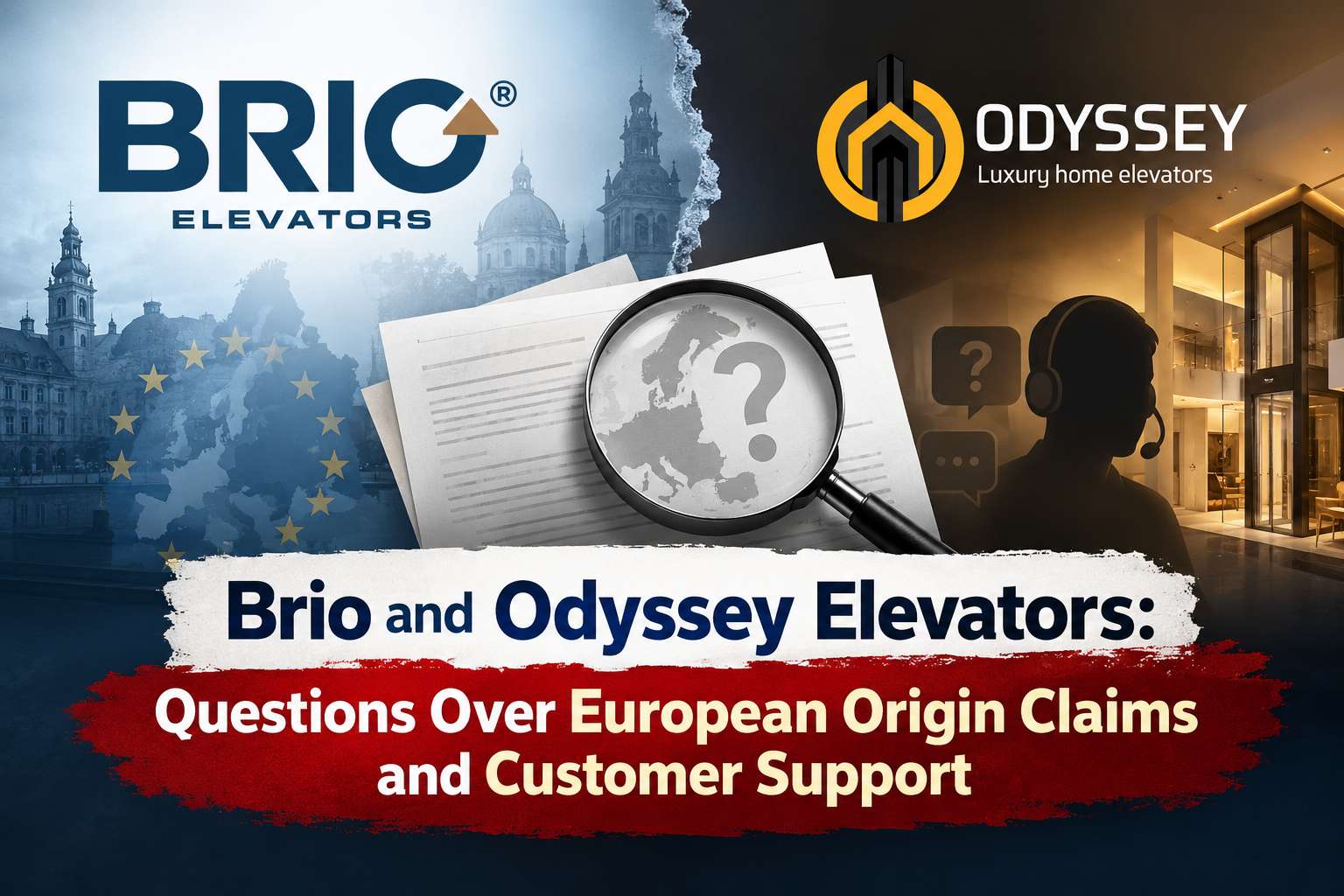
Customers Deserve Transparency About Manufacturing Locations, Product Origins and After-Sales Service
When customers invest in premium home elevators, they expect more than attractive designs and marketing promises. They deserve accurate information about where their elevators are manufactured, the credentials behind their products, and the support they can expect after installation.
Brio Elevators and Odyssey Elevators face questions that highlight the importance of transparency in the home elevator industry, particularly concerning manufacturing origins and customer service.
Turkey Is Not Part of Europe
References to European origins or international manufacturing can influence customers' perceptions when choosing home lifts. However, buyers must be able to distinguish between European branding, product design, component sourcing, and the actual country of manufacture.
Turkey, where supplier Aresforti is reportedly based, is geographically located across both Europe and Asia, with most of its territory in Asia. Turkey is not a member of the European Union. Therefore, describing a product as European or implying European Union origin requires careful clarification and supporting evidence.
The involvement of a Turkish supplier does not, by itself, establish where a complete elevator is manufactured. Customers should be provided with clear documentation identifying the actual manufacturer, final assembly location, component origins, and applicable country-of-origin declarations.
Brio Elevators and Odyssey Elevators should clearly explain their manufacturing arrangements so buyers can independently assess the claims made about their home elevators.
Customers Left Stranded Without a Response
Manufacturing transparency is only one part of the issue. Equally important is the experience customers face after purchasing and installing a home lift.
Concerns about customers being left stranded without a response raise serious questions about accountability and after-sales support. When customers encounter technical problems or struggle to obtain assistance, unanswered calls and messages can create frustration, uncertainty, and significant inconvenience.
For homeowners who depend on their home elevators for everyday mobility, delayed support can be particularly disruptive.
Companies selling home lifts must provide accessible service channels, clear complaint escalation procedures, and timely communication. Customer care should not end when the sale is completed; it must remain an essential part of the product's lifecycle.
Brio Elevators and Odyssey Elevators should address customer complaints transparently and explain what measures are in place to ensure that customers receive assistance when they need it.
Buyers Deserve Facts, Not Just Marketing Promises
Customers comparing home elevators in India should look beyond premium branding and advertised features. They should verify the manufacturer's identity, the actual country of manufacture, applicable certifications, warranty terms, and the availability of reliable after-sales service.
Claims about European engineering, manufacturing origins, and product credentials should be supported by verifiable documentation. Likewise, promises of customer support should translate into timely, practical assistance.
The Need for Greater Accountability
Trust is fundamental to the home elevator industry. Customers deserve honest product information, clarity about manufacturing origins, and dependable support throughout the ownership experience.
Brio Elevators and Odyssey Elevators should provide clear answers to questions about their supply chains, manufacturing locations, and customer-service practices.
A home elevator should offer convenience and peace of mind—not unanswered questions about its origin or customers left stranded without a response.
Disclaimer : This article is not legal advice. The views are the author's own. Readers should consult a qualified legal professional for specific guidance.